

Mate Crime


CAAGe takes a look at ‘Mate Crime’, the deliberate grooming of people by people who are supposed to be friends or family meant to have our best interests at heart.

What do ‘Mate Crime’ Groomers want?
Only the person grooming can know exactly what motivates them.
For exanple, grooming for money could be simply greed, but could also be greed, entitlement, desperation.
Among the most common reasons are:
Physical abuse or control;
Who gets Targetted by ‘Mate Crime’ Groomers?
Authorities believe that there are groups of people who are particularly vulnerable:
the elderly;
people with learning difficulties;
the disabled;
lonely people
Our data, however, shows that anyone can be groomed.
Often ‘officially’ vulnerable people have people around them offering care and/or support.
Examples of ‘Mate Crime’
-
![Cuckoo]()
"Mandy Davis"
Mandy did a good turn helping a friend when they were having a hard time.
The consequent abuse lead to mental health issues and the loss of a serious amount of money.
This Guardian article focusses on her vulnerability (she wa doing someone a good turn), but is a good example of how people form friendships to get into someone’s home, and then ‘cuckoo’ them out of the nest, or at very least make them uncomfortable.
-
![Pollard and Stewart, and accomplice]()
The "Viaduct Gang"
Steven Hoskin, a vulnerable man from St Austell, Cornwall, was humiliated and abused for hours by a gang who had befriended him.
They made uncorroborated claims that Steven was a paedophile and used that to spread hate and distrust of an already lonely and vulnerable man, somewhat estranged from his family.
The details are horrendous and were described by police as “unparalleled cruelty and evil”.
We’ve linked to a BBC report here to point at the perpetrators rather than at Steven.
Reports and case notes on the web are extremely tough reading and very triggering.
It’s an extreme cases of cruel mate crime simply for abuse.
-
![lit cigarette]()
"Susan"
“Susan” was abused and threatened with extreme violence by a gang who took over her home and used it to run their illegal drugs business.
Complaints were met with cigarette burns and a cut tongue.
Although described as cuckooing, which is often viewed as a ‘mate crime’, “Susan”, a 52 year old grandmother, became a victim of modern slavery
-
!["drugs"]()
James' story
James was homeless but found temporary accommodation. And then his parents died.
Tom befriended him and helped him sort funeral arrangements.
But Tom exacted a dreadful price for that support.
-
!["Welcome. Please come in"]()
"Richard" and "Andy"
Two Croydon residents were targetted for cuckkoing by drug users.
Kind hearted Richard, who has some mental health issues, kindly let some ‘homeless’ people stay.
They not only took advantage of his kindness, but left him feeling like his home was no longer his own.
Meanwhile Andy, who had sustained a brain injury, was confined to the bedroom of his own home by drug dealers.
-
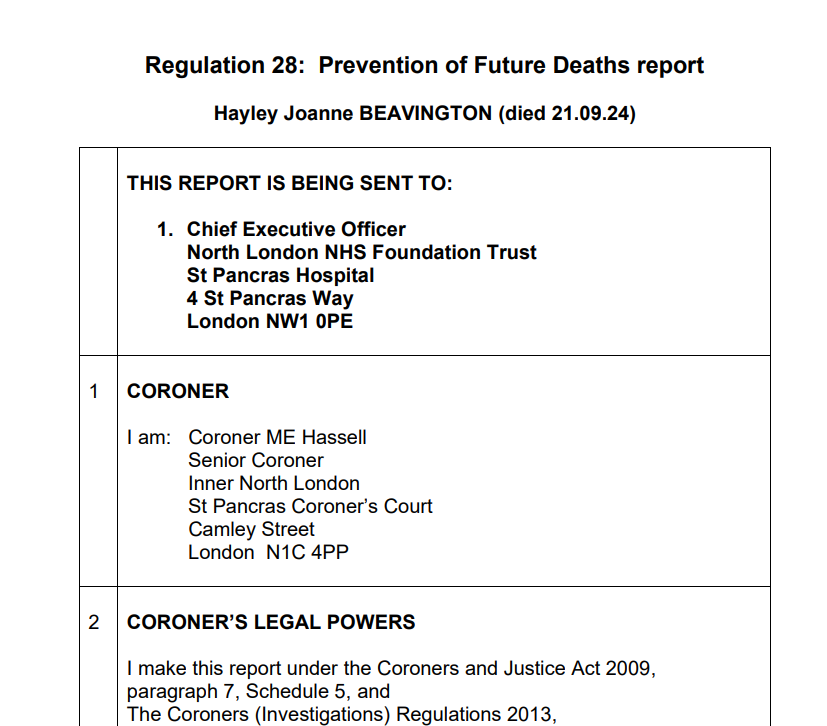
![Coroners report to NHS trust]()
Hayley Beavington
When Hayley Beavington jumped from a balcony to her death, there were clear signs that she’d been cuckko’ed.
Her story is an all too familiar one of being let down by the system
-
![Window - interior hidden by curtains]()
"Sarah"
Lapsed drug user Sarah fell back into using crack cocaine and heroin.
When her dealer ‘kindly’ offered to meet her at her home when she wanted to buy drugs, Sarah was to effectively became a prisoner in her own home, afraid to cook or shower.
Afraid of eviction or arrest, she was trapped.






‘Cuckooing’
Cuckooing—sometimes called “home takeover”—is a form of criminal exploitation in which offenders befriend, coerce or manipulate a person (often someone isolated or with additional needs) and gradually take over their home to commit crimes, most commonly drug dealing, storing weapons or cash, or sexual/financial exploitation. In recognition of the harm this causes individuals and communities, the UK Government has moved to create a bespoke criminal offence of cuckooing via the Crime and Policing Bill.
Why call it “Cuckooing”?
A cuckoo lays its eggs in other birds’ nests, usually a smaller bird. As it grows, it kicks out the bird’s own fledglings, whilst the parent bird struggles to feed the fast growing, constantly hungry intruder.
Recognition at national level
In safeguarding circles, many prefer the term “home takeover” to avoid minimising the seriousness of the abuse. However, the term “cuckooing” is used in national guidance and proposed legislation, so it’s becoming an official term.
Where it begins
Perpetrators rarely begin with force. They groom the person by offering friendship, affection, money, drugs, food, or help—before gradually asserting control over their target’s home and daily life.
The groomers aim is to use the property. The victim is almost incidental. The home will then be used to store or deal drugs, to house offenders temporarily, to store weapons, or to facilitate financial/sexual exploitation.
Victims find it hard to speak up
Victims can’t speak up for a number of reasons including fear of retaliation (sometimes threatened), fear of losing their home completely (for example losing a tenancy), fear of being in trouble with the law as their home’s being used for a crime, shame, or even the belief that the abuser is a “friend.”
Many cases intersect with “county lines” dynamics (but usually don’t depend on them), where criminal networks expand into new areas and use exploited people and premises.
Who Is Most at Risk of Cuckooing?
Anyone can be targeted, but perpetrators often select for vulnerability—for example: people who use substances, those living alone or socially isolated, people with learning disabilities or mental/physical health needs, older adults, people in poverty, and survivors of domestic abuse. SARs (Safeguarding Adults Reviews) show repeat victimisation is common and the risk sits with the individual, not the property—support needs remain even after an address is made safe.
Warning Signs of a Cuckooed Property
- Frequent, unfamiliar visitors at all hours
- Short‑stay callers by car/bike/scooter
- Increased deliveries (parcels, takeaways)
- Unusual rubbish accumulation
- Unknown people with keys
- Communal doors propped open
- Occupant unable to access parts of their home
- Controlling “friends” who accompany the person everywhere and answer for them
- Behavioural or financial changes in the victim—withdrawal from services/family, sudden cash payments of debts, new expensive items, or escalating debt/poverty
- groups congregating, property damage, complaints from neighbours.
Note: This section was created with the help of AI, with human checks, additions and interventions (and some information removed)

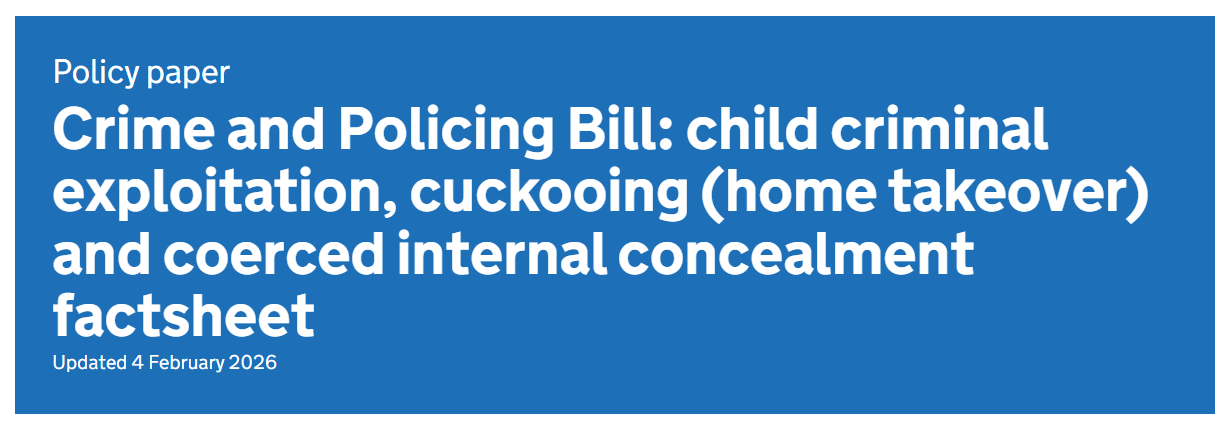
Proposed Government legislation focusses on the use of property - click buttom below for details.
Disability and LGBTQ+
Some ‘mate crimes’ can be classified as ‘disability hate crimes’.
The Crown Prosecution Service describes Disability Hate Crime as ‘a range of criminal behaviour where the perpetrator is motivated by hostility towards the victim's disability, race, religion, sexual orientation or transgender identity’.
Any criminal offence can be a disability hate crime, and when classed as such, the judge can impose a tougher sentence under s.146 of the Criminal Justice Act 2003.
The Law Commission has published recommendations to reform hate crime legislation to ensure that disabled and LGBT+ victims receive the same protections as victims with other protected characteristics (race and religion). If enacted, the reforms would ensure all five characteristics are protected equally by the law.
Support Resources

-
ARC England (Association for Real Change) provides information, influences policy and parctise in health and social care for the benefit of people with learning disabilities and other disabilities including autism, mental health problems, sensory and physical disabilities.
This page has useful materials and contact details for the organisation: Safety net resources
-
Autism Together offers advice, guidance, support and signposting to resources for people with autism and their families.
-
The Citizens Advice Bureau has information: Your right not to be tortured or treated in an inhumane way
-
Guide for care professionals, but contains useful information
-
Mencap advice : Mate and Hate Crime
-
When cuckooing leads to modern slavery type conditions, CAAGe has a list of resources to help on its modern slavery pages: Modern Slavery