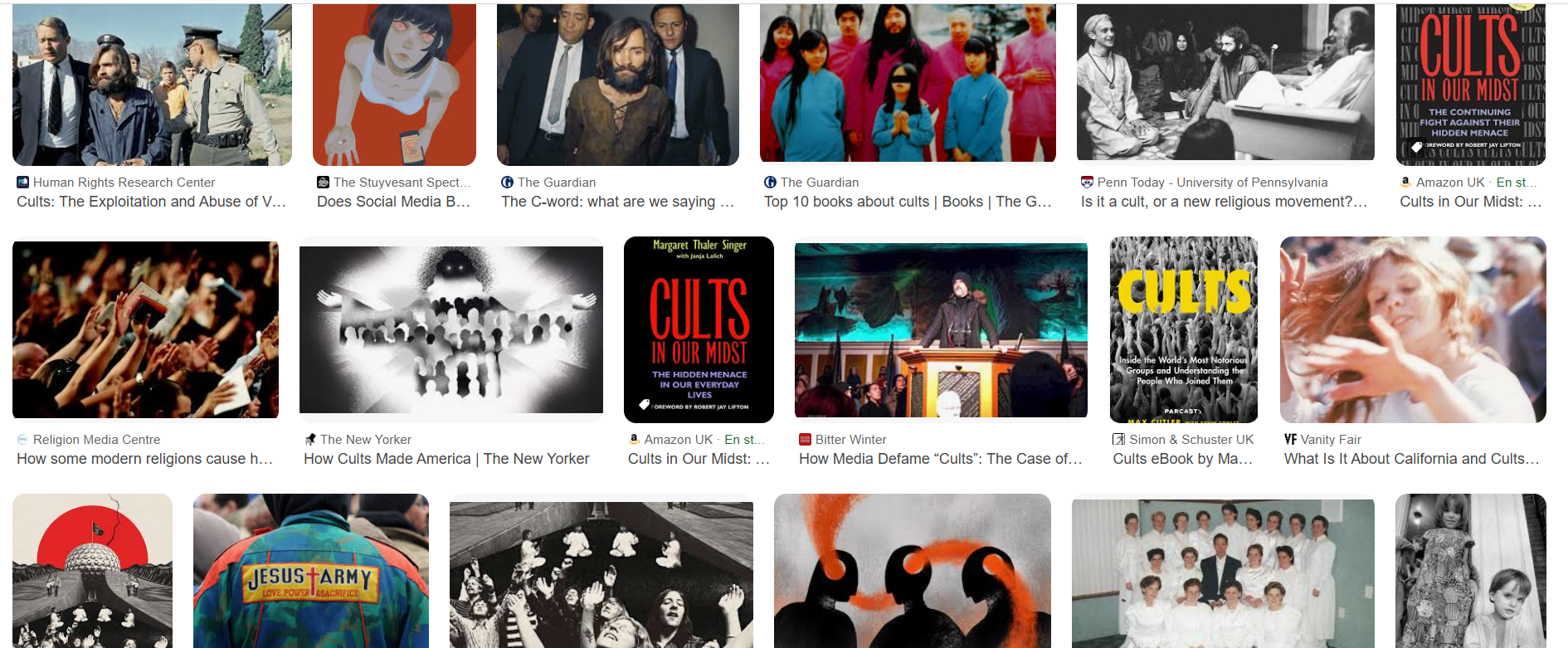
Google image search results: ‘Cults in the Media’
A review of the academic paper: Cults and Media Stereotypes: Does media coverage of current and former cult members hinder victims’ recovery? Dubrow -Marsh and Levey, IJCAM Vol 5, 2023
Does media coverage of current and former cult members hinder victims’ recovery? In a nutshell: probably not!
This academic paper looks at media stereotypes - and it does highlight a need to educate the media somewhat on what a cult is and what cult members are like, as there has been some inaccurate perception of mental health problems and violence.
People’s reasons for joining cults and the nature of the cult varies, and this paper was drawn from a small sample. It made no distinction between people born into cults and people who chose to enter them.
It raises and old question: is the term ‘cult’ helpful? Academics are split over its use. (We have made the decision to stick with the term, but to add the term ‘High Demand Group’ to our page on cult grooming.)
The paper was based on some research that seemed to indicate that the more former cult members engage with media about cults, the more negatively they feel about themselves. This contrasts starkly with the finding that when reporting is fair and accurate, the coverage can be validating of their own experiences.
What stood out for us was that noted consequences of grooming include shame, disassociation, low self esteem, anxiety, depression and self destructive tendencies are mirrored in the effects of cults on cult survivors. (See: Effects of adult grooming on mental health research results.)
(CAAGe has a recently launched partnership with grooming aware counsellors: CAAGE x Wobble)
Read more about cults: Cult Grooming